The development is situated in an environmentally sensitive area. The proposed scale and density of the proposals pose a real threat to wildlife on site and in the surrounding area, and insufficient attention has been paid to mitigation.
The National Planning Policy Framework (Paragraph 8c) states that there is a duty to ‘protect and enhance’ the environment and to ‘minimise pollution’.
The gas holder site itself is part of a Site of Importance for Nature Conservation (SINC): The Berverley Brook in Kingston, which includes the Kingshill allotments, woodland and southern access route. It also adjoins two other SINCs: The Beverley Brook in Sutton, including parts of the horsefields, and Sir Joseph Hood Memorial Wood. The latter is also designated nature reserve. It should be reserved for nature, not Berkeley’s sales and marketing department.
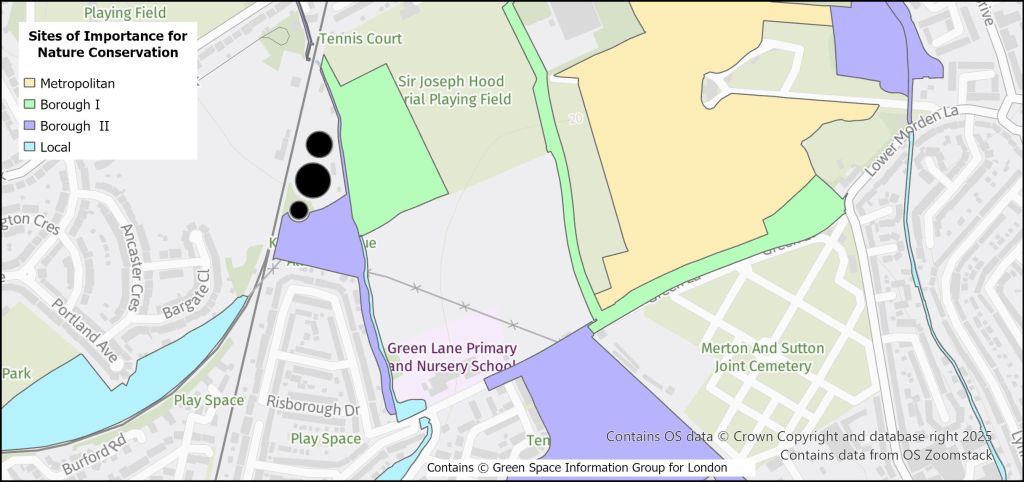
There is a presumption against any form of significant development, particularly tall buildings, near SINCs as laid out in Kingston’s Draft Tall Building Strategy (page 21): “Green spaces can be highly sensitive to tall buildings through visual impact on their natural or open landscape character, impacts on biodiversity through changes to microclimates and more intense use associated with higher development densities”.
The London Plan (Policy D9) goes further on tall buildings:
“4 a) the cumulative visual, functional and environmental impacts of proposed, consented and planned tall buildings in an area must be considered when assessing tall building proposals and when developing plans for an area. Mitigation measures should be identified and designed into the building as integral features from the outset to avoid retro-fitting”
“3.9.10 The list of impacts of tall buildings in Policy D9 Tall buildings is not exhaustive and other impacts may need to be taken into consideration. For example, the impact of new tall buildings in proximity to waterbodies supporting notable bird species upon the birds’ flight lines may need to be considered”
Is it really appropriate to locate so many tower blocks (and people) next to a designated nature reserve and so many SINCs?
Kingston Council’s Core Strategy (Policy C3) states “The Council will protect and improve Kingston’s valued natural and green environment by: protecting Kingston’s open space network from inappropriate development through its open spaces designations; Green Belt, Metropolitan Open Land (MOL), Thames Policy Area, Sites of Importance for Nature Conservation”
The gas holder site is designated Metropolitan Green Chain, a special type of Metrpolitan Open Land bordering watercourses that serves as a green corridor.
Policy DM 5 (Green Belt, Metropolitan Open Land (MOL) and Open Space Needs) states
“The Council will:
- only allow development on sites adjacent to the Green Belt, MOL or other open space designation that does not have a detrimental impact on its visual amenities and respects the size, form and use of that open space
d. ensure that development proposals do not harm open spaces which:
iii. form part of an area of value for wildlife“
Is a development of this scale compatible with protecting wildlife and the Metropolitan Green Chain?
Biodiversity Net Gain (BNG):
10% is the minimum BNG legally required for a development such as this. As a borough, Kingston hopes to achieve 30%. Berkeley state it will be 34%. However, they need to reveal the baseline they are working from, and whether they are taking account of the 2021 tree felling. And how do they propose creating Open Mosaic Habitat on a roof when it should be on ‘open’ ground?
 The Motspur Park Gas Holders Development: Get Involved!